
Type: dive-site
Overview
Garden Eels Dive Site is a slope-and-wall dive off Panglao Island, suitable for PADI Open Water divers and above. The site is characterised by a bow-shaped cliff wall, a coral garden along the top of the wall, and a sandy slope descending to 23 meters where colonies of Splendid Sand Eels (Heteroconger preclara) and Spotted Garden Eels (Heteroconger hassi) are the main draw.
The site is not affected by dynamite fishing. It is well-suited for snorkeling on the upper section, and is rated as a good night dive destination. Below 25 meters the interest diminishes; the productive zone is 8–12 meters.
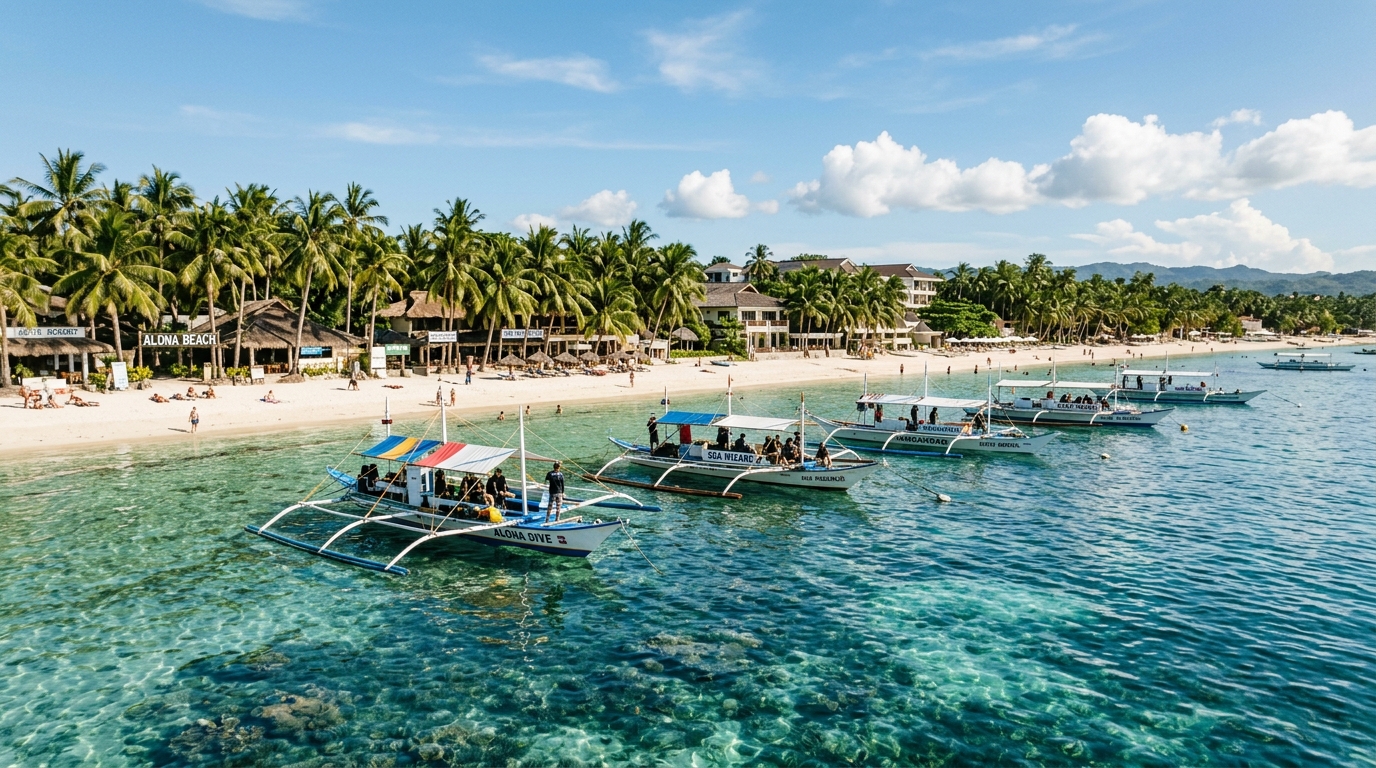
The site sits within Panglao’s dive-tourism circuit, one of the busiest in the Philippines, and is worked by multiple operators out of Alona Beach rather than any single outfit.
This entry corresponds with the BPTO-listed “Garden Eel” dive site (see related entry: garden-eel).
Location
Off Panglao Island, Panglao municipality, Bohol, on the reef flats and slopes ringing the island’s coast — a separate reef system from the Danajon Bank double barrier reef, which lies off Bohol’s north coast near Talibon and Getafe and is one of only a handful of double barrier reefs anywhere in the world.
[TO ENRICH: GPS mooring coordinates; which coast of Panglao — the site’s orientation relative to Alona Beach and other known sites.]
Getting There
Dive boats depart from Alona Beach and Panglao’s various beach dive operators. Panglao is connected to the Bohol mainland by bridge and is approximately 15–20 minutes from Tagbilaran City by private vehicle.
[TO ENRICH: which operators run regular trips; average boat time from Alona Beach to the site.]
Practical Info
| Parameter | Value |
|---|---|
| Dive type | Slope / Wall |
| Skill level | PADI Open Water and above |
| Depth range | 5–23 m |
| Best depth | 8–12 m |
| Visibility | 8–25 m |
| Current | 0–2 (low) |
| Snorkeling | Yes |
| Night diving | Yes |
| Dynamite-free | Yes |
What to Expect
Entry runs along the wall with the cliff on either shoulder — the bow-shaped cliff is the first landmark, with nudibranchs and Red-Amethyst-Purple Fin Anthias working the coral garden at the top. Moving down the sandy slope, the eel colonies take over: Splendid Sand Eels (Heteroconger preclara) and Spotted Garden Eels (Heteroconger hassi) extend vertically from the substrate and retract as divers close in, most reliably in the 8–12 meter band.
Night dives shift the experience toward nocturnal reef species and heightened macro detail.
Notes
- Heteroconger preclara (Splendid Sand Eel) and Heteroconger hassi (Spotted Garden Eel) are colonial species — they live in dense groups in burrows in sandy substrate. Slow, careful approach at depth allows extended observation before they retract.
- The site is part of the broader Panglao dive circuit, which includes Alona House Reef, Arco Point, Black Forest, BBC Reef, and others.
- The site’s connection to the Danajon Bank double barrier reef system contributes to the high marine biodiversity.
Explore Panglao: Bohol's Busiest Beach and Dive Municipality
More to see in this area
 municipality
Panglao: Bohol's Busiest Beach and Dive Municipality
Panglao is the island municipality behind Alona Beach and Bohol's reef diving, joined to the mainland by two bridges and drawing the largest share of the province's foreign tourist arrivals.
Best: Dec–Apr
More attractions in Panglao: Bohol's Busiest Beach and Dive Municipality
Other things to see nearby
Arco Point Dive Site
Arco Point is an easy wall-and-slope dive off Panglao for PADI Open Water divers and up, with 10–25 m visibility and depths of 4–27 m. It is most interesting at 10–15 m and is unaffected by dynamite fishing.
- Balicasag Island Diving — Balicasag Island, a marine sanctuary off Panglao, offers vertical walls over deep water with strong currents, healthy corals and pelagic visitors; December–January can bring hammerhead and occasional whale sharks.
- BBC Dive Site — BBC is a boat-access reef-and-wall dive off Panglao; the top reef averages 110 m wide and the wall ends around 18 m, with sponges, brown daisy corals, gorgonians, pygmy seahorses and schools of sergeant majors. Good for check-up dives and skills training.